







































Acceptance alone isn't evidence
There is no record of what was shown or under what conditions.
- Text shownno record
- Accepted purposesno record
- Date and channelno record
- Box checkedtrue
In an audit, the only thing you can prove is the true.
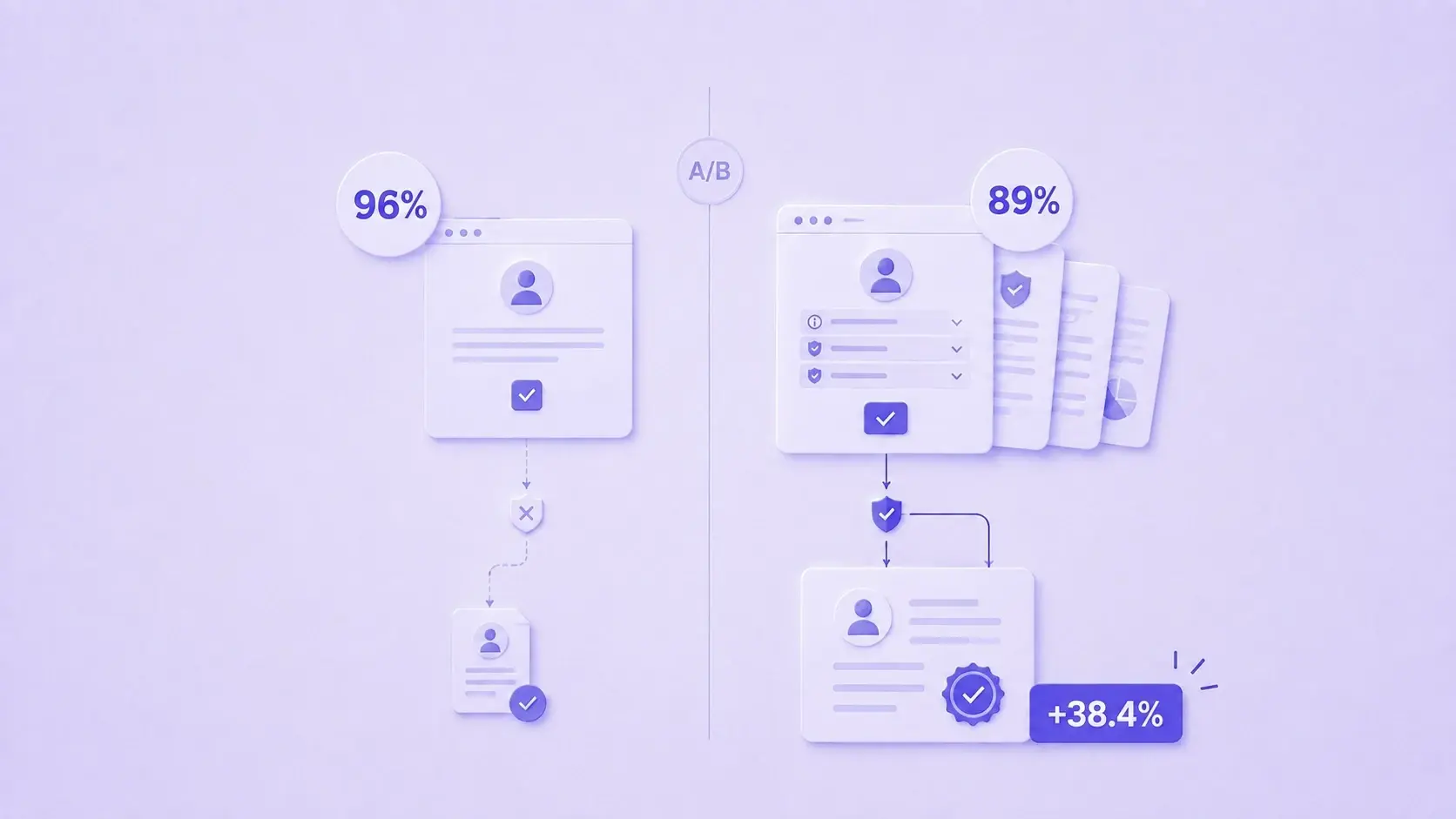
Transparency boosts conversion: what we learned designing consent experiences under Law 21.719.
Read the articleCapture, record, and sync every consent, with evidence of each acceptance and withdrawal.
Trusted by privacy leaders at:
Consent is requested across different forms, apps, and service points, and over time no one knows which permissions are still valid or how they were obtained.
There is no record of what was shown or under what conditions.
In an audit, the only thing you can prove is the true.
Without a shared status, each area works from a different version of the permission.
Can I use their email for marketing?
Three systems, three answers. None of them is the organization's.
The organization keeps using data after the person has withdrawn consent.
The consent ended in March. The use of the data did not.
The law requires you to prove the consent was freely given, specific, unambiguous, and informed.
What can be proven about that checkbox:
The law asks for evidence, not intent.
Consent is requested across different forms, apps, and service points, and over time no one knows which permissions are still valid or how they were obtained.
In an audit, the only thing you can prove is the true.

Better filing won't fix any of these four problems: you need a tamper-proof record, a single status per person, and withdrawals that reach every system.
The Consent module brings everything into one place: clear, traceable, verifiable permissions whose status stays up to date across every connected channel.
Verifiable evidence of every consent. Records what was shown, when it was accepted, and under which clause version.
Read moreSynchronized withdrawal. When a person withdraws their consent, the change is reflected across every connected system.
Read moreCapture consent as the law requires. Granular, versioned, and withdrawable.
Read morePrivacy Center. Where each person manages their own permissions.
Read moreSingle source of truth. Check the current status of permissions in one place, without depending on multiple systems or scattered records.
Read moreDraft consent templates with AI. AI suggests clauses based on the purpose of the processing and the applicable regulatory framework.
Read moreEach step covers a different stage of consent: how it is defined, how it is captured, how the evidence is kept, and how it is maintained over time.
A template defines the consent you want to capture, the purposes and the data each one involves.
People can accept or reject purposes.
AI drafts the consent wording based on the purpose and the applicable regulation.
Every template has a scope: the whole organization, a product, or a subsidiary.
It integrates through a widget or the API, and works the same on web, in the app, in person, or over the phone.
Opening an account, signing up for a service, subscribing: permission is requested in the same flow.
The template appears in two layers: the essentials first, the detail for anyone who wants to read it.
From the Privacy Center, each person can review, update, or withdraw what they authorized.
The evidence includes a PDF that reconstructs what the person saw, with the clause version, channel, and date.
Records are never overwritten. Every change stores a new event, sealed and chained to the previous one: if anyone tampers with one, the chain gives it away.
In an audit, the evidence is exported as is. There is nothing to reconstruct.
Soyio stores the data categories and authorized uses, not your customers' data.
Your team reviews every consent and withdrawal from a dashboard.
Your system queries the API for permission before using any data.
Reports are generated from the recorded evidence, in the formats required by the CMF (RDC30, RDC31, RDC40) and other regulators.
Each template defines how long consent lasts. When it expires, it is requested again or processing stops.
| Traditional management | With Soyio | |
|---|---|---|
| Where it is stored | Spread across forms, CRM, emails, and spreadsheets | Centralized in a single repository |
| Evidence | Partial or hard to reconstruct | Recorded and verifiable |
| Withdrawal | Manual, not synchronized across channels | Synchronized across every channel |
| Clarity for the person | Long, vague wording | Separate, understandable purposes |
| Audit response | Manual reconstruction | Reports and evidence available |
Transparency is central to privacy. Find answers to common questions here. For anything else, contact us.
It is Soyio's system to request, record, and prove consent over personal data. Every consent is linked to its data subject, its purpose, the version of the clause accepted, and the channel it came through.
Every acceptance or withdrawal leaves a snapshot and a PDF of what the person saw, with the exact date and time. The event is sealed with a hash that prevents it from being altered without leaving a trace.
When a person withdraws their consent, the status changes immediately in Soyio and is synchronized with the connected systems, so the change is reflected in the uses that depended on that consent. Every movement is recorded.
Yes. Soyio integrates through APIs and SDKs with web forms, apps, CRMs, and internal systems, so capture and withdrawal happen inside the flows the organization already has.
The law requires prior, informed, specific, and demonstrable consent. Soyio keeps that evidence available per data subject and per purpose, along with the traceability of every status change.
The Privacy Center lets each person see and manage their permissions. Access, rectification, erasure, objection, portability, and temporary restriction requests are handled in Rights Manager, with a record of every step.
Soyio captures, versions, and syncs every consent, with evidence ready for an audit.
Book a demoSubscribe to our newsletter
A weekly roundup of privacy, regulation, and technology news that could affect your business.
Subscribe (LinkedIn, opens in a new tab)